
Last Updated: October 31, 2026
Quick Summary
Timber shutters are worth the money if you own your home and plan to stay for many years, because they last for decades and can be repaired rather than replaced. They cost more upfront than blinds or faux-wood, but that outlay spreads over a long life.
- Bespoke timber shutters are measured to the millimetre and built for one specific window opening.
- Pricing depends on material, size, shape and style, so only a site survey gives a reliable figure.
- A well-fitted hardwood shutter reduces draughts and slows heat loss at the window.
- Wooden shutters last for decades when well made, correctly fitted and kept reasonably dry.
- Faux-wood is the lower-risk choice for steamy bathrooms and short ownership horizons.
Table of Contents
- What You Are Actually Paying For With Timber Shutters
- Timber Shutters Cost Per Window: What Drives the Price
- Are Timber Shutters Good for Insulation?
- Wooden Shutters vs Blinds: A Like-for-Like Comparison
- How Long Do Wooden Shutters Last?
- Timber vs Faux-Wood: The Lifetime Cost Comparison
- Is Your Home Suited to Timber Shutters? A Room-by-Room Decision Framework
- Book a Free Home Visit and See the Shutters in Your Own Rooms
- Frequently Asked Questions
What You Are Actually Paying For With Timber Shutters
Timber shutters are bespoke window coverings made from solid hardwood, cut and assembled to fit one specific window opening.
At Wooden Shutters, we fit bespoke hardwood shutters for homeowners across Derbyshire, and the question people ask most is whether the outlay is justified.
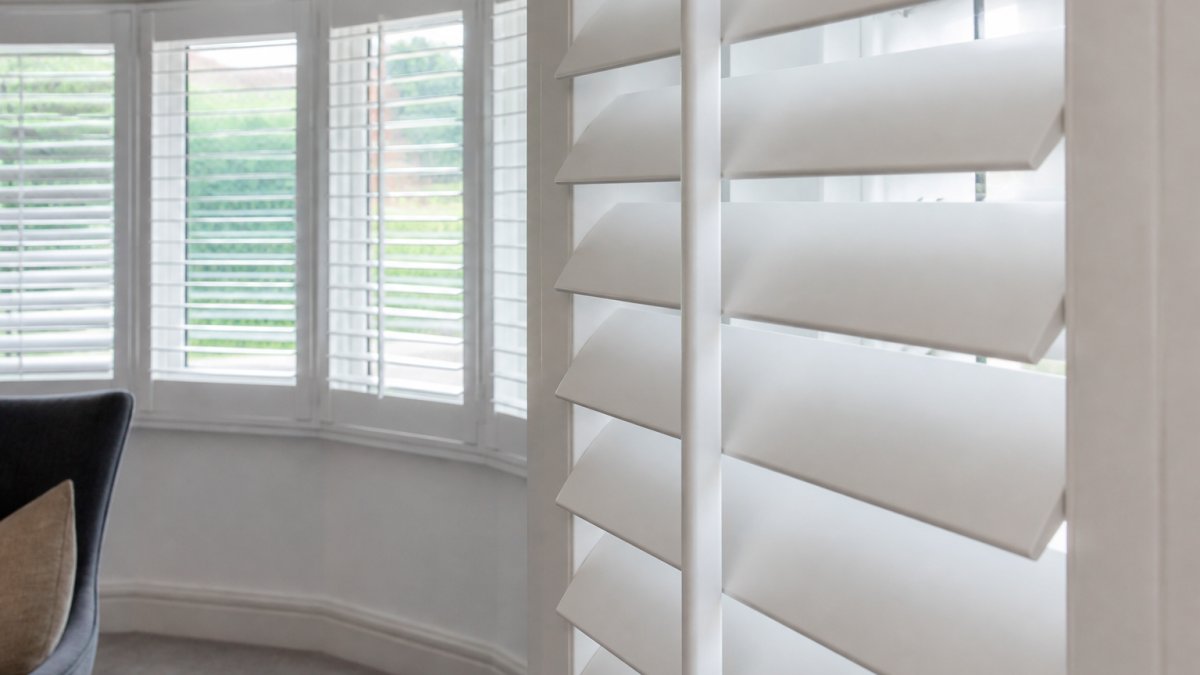
Bespoke Fit, Hardwood and Craftsmanship
A standard blind is made in fixed widths and trimmed on site. A timber shutter is measured to the millimetre, then built for that opening.
Hardwood selection matters too. Sustainable, ethically sourced timber is the material we work with, and it can be repaired rather than replaced.
If you want to see what bespoke actually looks like across styles, our bespoke shutters range shows the options available.
Timber Shutters Cost Per Window: What Drives the Price
Timber shutters cost per window varies with material grade, window size, shape and the style you choose. There is no single figure, because no two windows are identical, but there are enough patterns in how quotes are built to give you a realistic range before anyone measures your home.
Pricing depends on the size, shape and style of each window, along with the material chosen, so there is no single figure that applies to every home.
Several factors move the price, including the following:
- Material: solid hardwood sits at the top; faux-wood and composite sit below it. The gap is driven by the cost of the raw timber, the wastage in cutting around defects, and the finishing work, hardwood takes more preparation to accept a paint or stain finish evenly.
- Size: a full-height window needs more panels and more timber than a half-height one, and panel count drives both material and labour. A tall window may need a mid-rail to keep louvres rigid, which adds joinery.
- Shape: bay windows, arched windows and non-standard openings need custom engineering, which adds labour. Angled returns on a bay have to be cut and jointed to meet precisely; that is skilled bench work, not a trimming job on site.
Material, Size and Window Shape
Awkward shapes are where cheap options fail and bespoke earns its keep. A bay window with angled returns is the classic example: ready-made products leave gaps at the joints, and gaps mean draughts and light bleed.
For windows like these, bespoke bay window shutters are built as a set of panels that meet at the angles. That is more work, and it costs more, but it is the difference between a cover that fits and one that nearly fits.
What Else Lands on the Quote
Beyond the panels themselves, a fitted quote usually includes:
- Survey and measuring: a free home consultation visit is available, but confirm the details in writing.
- Fitting: frames, hinges, magnets and catches, plus the labour to level and pack the frame so the panels sit flush.
- Finishing: factory-painted or stained panels cost more than raw timber, but they avoid on-site finishing and the dust and drying time that comes with it.
Ask for a written quote that separates materials, fitting and finishing. A single lump sum makes it hard to see where the money goes and harder to compare two fitters fairly.
If you want to see what bespoke actually looks like across styles, our bespoke shutters range shows the options available.
Are Timber Shutters Good for Insulation?
Timber shutters help with insulation by adding a solid barrier between the room and the glass, which reduces draughts and slows heat loss at the window.
The key word is fitted. A shutter that sits flush to the frame traps a layer of still air against the glass, and still air insulates.
Where timber shutters do well is in older properties with single glazing, where the window is the weakest point in the room.
Wooden Shutters vs Blinds: A Like-for-Like Comparison
Wooden shutters and blinds both control light and privacy, but they differ in fit, lifespan and long-term cost. A fair comparison has to look past the purchase price.
| Feature | Timber Shutters | Blinds |
|---|---|---|
| Fit | Made to measure, flush to frame | Often standard sizes, trimmed on site |
| Lifespan | Decades with care | Several years, then replacement |
| Repair | Panels and louvres can be replaced individually | Usually replaced whole |
| Insulation | Good when fitted flush | Limited, gaps at edges |
| Upfront cost | Higher | Lower |
| Long-term cost | Spread over a long life | Repeat purchases add up |
The upfront price of blinds is lower. The question is how many sets you buy over twenty years, and whether the gaps at the edges bother you. For a street-facing room where privacy and light control matter daily, the shutter usually wins on use, not just on looks.
How Long Do Wooden Shutters Last?
Wooden shutters last for decades when they are well made, correctly fitted and kept reasonably dry. The variables are moisture, sunlight and how the timber was finished.
Maintenance, Repairs and End of Life
Maintenance is lighter than most people expect. Dust the louvres, wipe with a damp cloth, and touch up the paint or stain every few years.
The real advantage is repairability. If one louvre cracks or a hinge wears, the panel can be repaired or replaced without touching the rest of the set.
Watch out: shutters fitted in a steamy bathroom without adequate ventilation can absorb moisture and warp over time.
Timber vs Faux-Wood: The Lifetime Cost Comparison
Most shutter comparisons stop at the purchase price, which is exactly where the interesting part begins. Faux-wood shutters cost less upfront and handle moisture well, which makes them a sensible choice for bathrooms and kitchens.
The table below sets out the cost categories to compare. It deliberately uses no invented prices, the point is the structure of the comparison, which you can populate with your own quotes.
| Cost category | Timber shutters | Faux-wood shutters |
|---|---|---|
| Purchase and fitting | Higher upfront | Lower upfront |
| Routine care | Dusting, occasional damp wipe, re-oil or re-paint every few years | Dusting and damp wipe; no refinishing |
| Repair | Louvres, hinges and panels replaceable individually; refinishing possible | Component replacement depends on the system; refinishing not possible |
| Moisture risk | Needs ventilation in wet rooms; warping possible if ignored | Handles moisture well |
| Expected life | Decades with care | Shorter, and replacement is usually whole-unit |
| End of life | Timber can be refinished and kept; disposal is bulky | Replacement cost recurs |
How to Run the Comparison for Your Own Home
- Fix an ownership horizon. Five years, ten years and twenty years give very different answers. If you expect to move within a few years, the upfront saving of faux-wood is real money you will not recoup through longevity.
- Get two like-for-like quotes. Same window, same style, same panel count, one timber, one faux-wood. Ask both fitters to itemise fitting and finishing.
- Estimate the care cost. Timber needs a touch-up every few years; price a tin of the specified paint or stain and an afternoon of your time, or ask the fitter what a refresh costs.
- Price the replacement cycle. Ask the faux-wood supplier, in writing, what the expected service life is and what a replacement panel costs. If the whole unit is replaced rather than repaired, that cost recurs.
- Add the risk premium for wet rooms. In a steamy bathroom, timber needs ventilation and a suitable finish; if neither is realistic, faux-wood is the lower-risk choice regardless of the lifetime maths.
What the Comparison Usually Shows
Over a long horizon, the gap narrows, but not because timber becomes cheap. It narrows because a faux-wood set may need replacing sooner, and it cannot be sanded back and refinished the way hardwood can.
The reverse is also true. If you are fitting one bathroom window in a rented flat, the lifetime argument never gets the chance to play out, and faux-wood wins on both cost and moisture tolerance.
Timber is the better lifetime buy when you own the property, plan to stay for many years, and are fitting several windows. Faux-wood is the better buy for wet rooms, short ownership horizons and tight budgets. The mistake is comparing them on purchase price alone.
For rooms with high moisture, faux-wood is the pragmatic pick. For living rooms, bedrooms and bay windows, timber’s appearance and repairability usually justify the premium.
Is Your Home Suited to Timber Shutters? A Room-by-Room Decision Framework
Timber shutters suit most rooms, but the right style changes from one to the next. Use this framework:
- Living rooms and street-facing rooms: cafe style gives privacy at the bottom while keeping light at the top. See cafe style window shutters.
- Bedrooms: full height for darkness and draught control.
- Whole-house projects: full height plantation shutters give a consistent look across rooms.
Best for: homeowners staying long term who want a fitted, repairable window covering.
Skip if: you are renting short term or working to a tight budget where blinds are the only option.
Book a Free Home Visit and See the Shutters in Your Own Rooms
The only way to know whether timber shutters are worth the money in your home is to see them against your own windows. Measurements, angles and light all change the answer.
We bring samples to you, measure properly, and explain the options with no pressure and no obligation. If you are ready to see what fits, contact us to arrange a free home visit.
Frequently Asked Questions
How much do timber shutters cost per window?
Timber shutters are priced per window or per panel, and the figure depends on the size and shape of the opening, the hardwood you choose, the louvre width, and whether the window is a standard rectangle or a shaped bay. Because every set is made to measure, pricing depends on the window and the options chosen. For current prices or a quote, visit the Wooden Shutters website.
Are timber shutters good for insulation?
A well-fitted timber shutter creates a solid barrier across the glass, which slows heat loss and reduces draughts around the window. The key word is fitted: a bespoke frame with no gaps performs far better than a loose off-the-shelf covering. Shutters work best alongside decent glazing and draught-proofing rather than as a replacement for them.
Do wooden shutters add value to a home?
Bespoke timber shutters are a fixed, made-to-measure feature rather than a temporary dressing, and buyers tend to read them as part of the property rather than something they will need to replace. They suit period homes and properties with awkward bay or arched windows where standard blinds leave gaps, and their main benefit is the daily privacy and light control they provide.
Are timber shutters better than blinds?
They do different jobs at different price points. Blinds are cheaper to buy and quicker to fit, but they hang in front of the window, collect dust on the slats, and often need replacing within a few years. Timber shutters are fitted into the reveal, give better privacy and light control, and last considerably longer, so the cost per year of use can end up lower. If you are dressing one small window on a budget, blinds make sense; if you want a permanent feature across a whole room, shutters usually win.
Are timber shutters suitable for bathrooms and kitchens?
Yes, provided the timber is properly finished and the room is ventilated. Bathrooms and kitchens carry more moisture and steam than a bedroom, so Mention the room when you book a consultation so the specification is matched to the conditions.
The decision comes down to how long you plan to stay and how much your windows ask of a covering. We are a family-owned Derbyshire business, we source sustainably, and we combine traditional skills with modern measuring and fitting. Get started with Wooden Shutters and see bespoke hardwood shutters measured for your own rooms.
