
Quick Summary
The right shutter paint finishes depend on where the shutters sit, what they are made from, and how much cleaning you want to do. For most interior shutters a satin or eggshell finish balances looks and wipe-cleanability, while exterior or humid locations usually suit a semi-gloss or satin exterior-grade paint.
- Satin suits most homes, offering a soft sheen that wipes clean easily.
- Use exterior-grade paint outside; standard interior paint can peel or blister in weather.
- High-gloss shows every flaw, so choose it only on smooth, well-prepared surfaces.
- Thorough preparation matters more than the finish you pick.
- Test a sample patch on a hidden louvre in both daylight and artificial light.
Table of Contents
- How Do You Choose the Right Shutter Paint Finish?
- Comparing Matt, Satin, Semi-Gloss and High-Gloss Shutter Finishes
- Best Paint Finish for Wooden Shutters Inside and Out
- Satin or Gloss Paint for Shutters: Which Suits Your Windows?
- Matching Shutter Colours and Paint Finishes to Your Home
- How to Paint Wooden Shutters Step by Step
- Booking a Free Home Visit to Choose Your Finish
- Frequently Asked Questions
How Do You Choose the Right Shutter Paint Finish?
Last Updated: November 24, 2026
Choosing the right shutter paint finish comes down to three things: where the shutters sit, what they are made from, and how much cleaning you want to do. Get those right and a satin or semi-gloss finish will look good and last for years. At Wooden Shutters, we help homeowners work through these choices, and the right finish usually starts with asking how the shutters will be used.
A shutter paint finish is the surface sheen that sits on top of the primer and colour coat. It ranges from flat and matte at one end to high-gloss at the other, and each level changes how light reflects and how easily the surface can be cleaned.
Start with the location. Interior shutters in a dry living room face very different conditions from exterior shutters in a damp bathroom or on a south-facing front window. Ask yourself:
- Is the room humid, or does steam build up often?
- Will the shutters be touched and wiped regularly, such as by children or pets?
- Does the window get strong direct sunlight?
- Are the shutters timber, MDF or another material?
For most interior shutters, a satin or eggshell finish balances appearance and cleaning. For exterior shutters or rooms with high moisture, a semi-gloss or satin exterior-grade paint usually performs better. Always check the paint’s specification for the surface you are painting before you buy.
Comparing Matt, Satin, Semi-Gloss and High-Gloss Shutter Finishes
The four main finishes differ in how they look, how durable they are and how much work they create. The table below summarises the trade-offs.
| Finish | Look | Durability | Cleaning | Best For |
|---|---|---|---|---|
| Matt | Soft, no shine | Low | Harder to wipe clean | Low-traffic interior rooms |
| Satin | Gentle, subtle sheen | Good | Easy to wipe | Most interior and many exterior shutters |
| Semi-Gloss | Clear, defined sheen | Very good | Very easy | Kitchens, bathrooms, exterior use |
| High-Gloss | Strong, reflective shine | Excellent | Easiest | Feature shutters, but shows every flaw |
Matt hides surface imperfections well, which suits older timber. It marks more easily and is harder to clean, so it works best in quiet, dry rooms.
Satin is the most common choice for shutters. It gives a soft sheen, resists scuffs reasonably well and wipes clean without much effort.
Semi-gloss is tougher and handles moisture well. It shows brush marks and surface flaws more clearly, so the preparation stage matters more.
High-gloss looks sharp and is the easiest to clean, but it reveals every dent, drip and rough patch. It suits smooth, well-prepared surfaces.
Choosing between these is a matter of balancing looks against practicality.
Best Paint Finish for Wooden Shutters Inside and Out
Wooden shutters need a finish that protects the timber while allowing it to move slightly with changes in temperature and humidity.
The table below connects those variables to a recommended sheen.
| Shutter material and location | Recommended sheen | Why | Watch out for |
|---|---|---|---|
| Interior timber, low-traffic room | Satin or eggshell | Balances a soft look with wipe-cleanability | Matt is harder to clean and marks easily |
| Interior timber, kitchen or bathroom | Semi-gloss or satin | Resists moisture and steam, wipes clean | Higher sheen shows brush marks and surface flaws |
| Exterior timber, sheltered | Satin exterior-grade | Good weather resistance without a hard shine | Interior paint will peel or blister outdoors |
| Exterior timber, exposed or coastal | Semi-gloss exterior-grade | Tougher film, easier to wash down salt and grime | Preparation must be thorough; flaws show |
| Interior MDF, any room | Satin or eggshell | MDF is smooth and stable; satin hides minor sanding marks | Avoid high-gloss unless the surface is flawless |
| Exterior vinyl | Satin or semi-gloss exterior-grade | Flexible finish that moves with the substrate | Check the paint is rated for vinyl; some solvents can attack it |
| Interior or exterior metal | Semi-gloss or gloss | Hard, washable film that resists rust when primed | Metal needs a suitable primer or the topcoat will flake |
For interior wooden shutters, a satin water-based paint is often a practical choice, as it is generally easier to work with and cleans up well.
For exterior wooden shutters, use a paint designed for outdoor timber. Look for products labelled for exterior use, with UV and moisture resistance.
Exposure matters as much as material.
A common mistake is using a standard interior paint outside. It may look fine for a season, then peel or blister once it meets weather.
Watch out: high-gloss on exterior timber shows every filled repair and drip.
Satin or Gloss Paint for Shutters: Which Suits Your Windows?
The choice between satin and gloss depends on the window and how the shutters are used. Satin suits most homes. Gloss suits specific situations.
Satin works well when:
- The shutters are in a living room, bedroom or hallway
- You want a soft, understated look
- You need a finish that is easy to clean but does not show every imperfection
Gloss works well when:
- The shutters are in a kitchen or bathroom where steam and splashes are common
- The surface is smooth and carefully prepared
- You want a bold, polished look as a feature
Bay windows and tall sash windows often show more light and reflection, which can make gloss look striking. Shutters in a bright room may look harsh in high gloss, so test a sample against the natural light at different times of day.
Watch out: a high-gloss finish on older or uneven timber will highlight every flaw, so either repair the surface properly first or choose satin.
Matching Shutter Colours and Paint Finishes to Your Home
The finish should work with the colour and the rest of the room. Light colours reflect more light, so a satin finish can make a bright room feel soft. Dark colours absorb light, and a higher sheen can help them look richer.
Consider the architectural style of the house. A period property often suits a traditional satin finish in a classic colour. A modern home may suit a crisp semi-gloss in a stronger tone.
Match or coordinate the shutter colour with: bespoke shutter options and local availability in the Derby area
- The window frames
- The wall colour
- The skirting and door trim
Tone-on-tone schemes, where the shutters sit close to the wall colour, create a calm look. Contrasting shutters, painted in a deeper shade than the walls, make a stronger statement. Always compare the sample with the actual frame and wall in your room.
How to Paint Wooden Shutters Step by Step
Good preparation matters more than the finish you choose. Work through these steps for a durable result, and read the paint manufacturer’s instructions before you start, because drying and recoat times vary by product and by temperature.
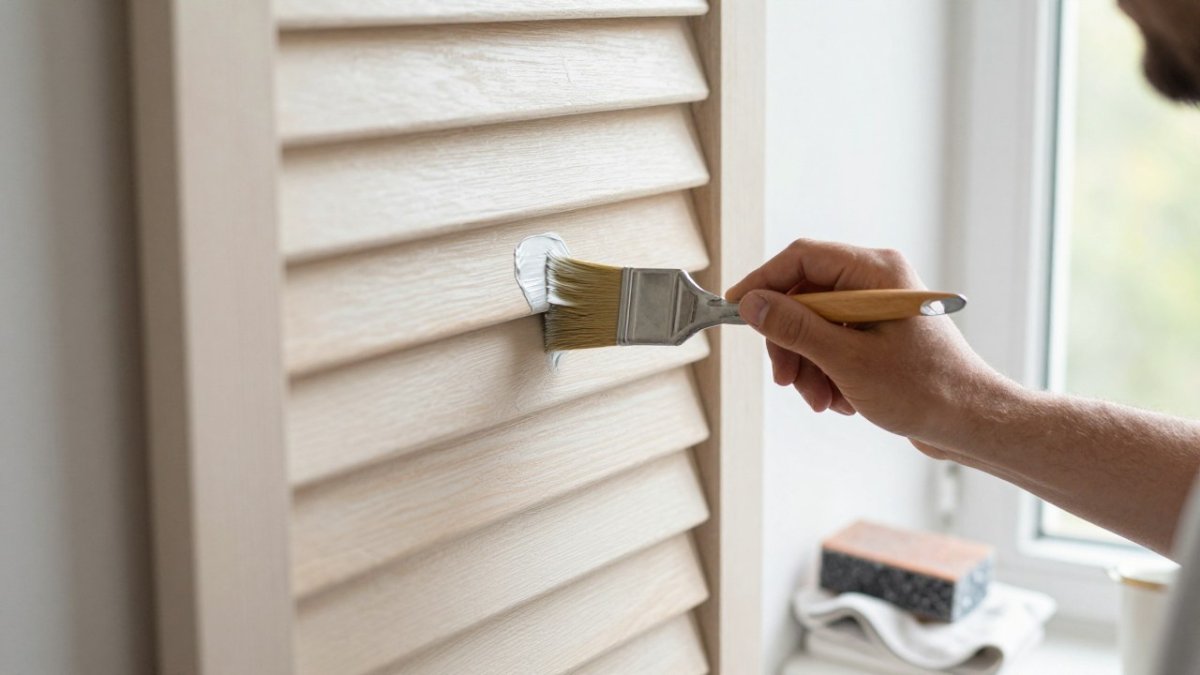
- Remove the shutters if possible, and lay them flat on a covered surface. Label each panel so it goes back in the right place. If they cannot be removed, work top to bottom and keep the louvres open so you can reach the edges.
- Clean the surface with a mild cleaner to remove grease, dust and any film left by household products. Rinse and allow to dry fully. On exterior shutters, wash down salt and grime first; paint will not adhere to a contaminated surface.
- Sand lightly with fine sandpaper to key the surface. Remove any loose or flaking paint back to a sound edge, and feather the edges so they do not show under the new coat.
- Fill any cracks or holes with a suitable wood filler, then sand smooth once dry. Check joints and lower rails, where water tends to collect.
- Apply a primer suited to timber and to the topcoat. Some exterior paints require an exterior-grade primer; using an interior primer under an exterior topcoat can shorten the life of the finish. Allow the primer to dry fully as the product directs.
- Paint thin, even coats with a good-quality brush, working with the grain. Let each coat dry as the product directs. Thin coats dry more evenly and are less likely to run or sag on louvres.
- Lightly sand between coats if the surface feels rough, then wipe off the dust. This is the step most often skipped, and it is the one that separates a smooth finish from a textured one.
- Test the finish in a hidden area before painting the visible faces. Check it in daylight and again in artificial light, because sheen and colour can look different under each.
Expect drying times to vary with temperature and humidity. Rushing a coat is one of the most common causes of tacky, uneven results.
Curing is different from drying. A paint film may feel dry within hours but continue to harden for days or weeks.
Once painted, a simple maintenance routine extends the life of the finish. Check the shutters each year, looking for:
- Chalky or dull patches, which suggest the film is breaking down
- Cracks at joints or along the lower rails
- Peeling or blistering, which usually means moisture has got behind the paint
- Mould or mildew in shaded or damp positions
Wash exterior shutters down periodically, more often in coastal or exposed positions, and touch in any bare or cracked areas before water gets behind the film.
Watch out: painting over a damp or contaminated surface traps moisture and causes blistering within a season, so never rush the cleaning and drying stages to save time.
Booking a Free Home Visit to Choose Your Finish
If you are still unsure which finish suits your shutters, a free home visit can help. A free home visit lets you see each finish against your actual light, walls and window frames. There is no obligation to buy, and you can take your time making the decision. Check whether we cover your town on our Bakewell service-area page.
You can book a free home visit to talk through your options.
Frequently Asked Questions
What is the best paint finish for interior shutters?
Satin is the most practical choice for most interior wooden shutters. It has a soft sheen that hides small surface marks and dust better than gloss, and it wipes clean without leaving a shiny glare on the louvres. Matt looks elegant but shows fingerprints and is harder to clean in rooms like kitchens and bathrooms. Semi-gloss suits high-traffic areas where you want maximum wipe-ability, though it highlights any imperfections in the wood. For a balance of finish and durability, choose a satin water-based paint and use a test patch on one shutter before committing to the whole set.
Should shutters be painted in satin or gloss?
Satin is usually the better choice for shutters, particularly where they receive daily handling. Gloss gives a crisp, formal look and reflects more light, which can suit a traditional property, but it also exposes every brush mark, dent and uneven surface. Satin softens those flaws and still cleans easily with a damp cloth. Gloss can work well on exterior shutters in a period home where a polished look is part of the design, provided the wood is well prepared and the paint is an exterior-grade product.
Can you use matt paint on wooden shutters?
Yes, matt paint can be used on wooden shutters, especially in bedrooms and living rooms where a softer, understated look is wanted. It hides surface imperfections well and suits a modern or country style. The drawback is that matt is harder to clean, so marks and fingerprints are more difficult to remove without leaving a visible patch. Matt is generally less suitable for exterior shutters, where a satin or semi-gloss exterior paint offers better protection against moisture and wear.
How do you prepare shutters before painting them?
Remove the shutters from the window if you can, then clean them thoroughly with a mild detergent to remove grease and dust. Sand the surface lightly along the grain to key the old finish, and fill any cracks or holes with a suitable wood filler. Wipe away dust, then apply a primer suited to wood, particularly on bare timber or knots, which can bleed through. Allow the primer to dry fully before applying two thin topcoats of your chosen finish, sanding lightly between coats for a smooth result.
