
Quick Summary
The main types of window shutters are full-height, tier-on-tier, café-style and shaped shutters, plus louvred, solid-panel and tracked styles. Full-height shutters give the most privacy, tier-on-tier splits light and privacy across two sections, café-style covers only the lower half, and shaped designs fit bay and angled windows.
- Full-height shutters cover the whole window from sill to frame top for maximum privacy.
- Tier-on-tier shutters let you close the lower tier while keeping the upper tier open for daylight.
- Café-style shutters cover only the lower half, suiting kitchens where you want privacy at sink height.
- Louvred shutters have adjustable slats that angle to let in light while blocking direct sun.
- Measure bay and arched windows on site, since guessing angles often leaves gaps when panels close.
Table of Contents
- What Are the Different Types of Window Shutters?
- Full-Height Shutters: Privacy and Presence Across the Whole Window
- Tier-on-Tier Shutters: Split Control for Light and Privacy
- Café-Style Shutters: Lower-Half Cover for Kitchens and Living Rooms
- Bay Window Shutters: Fitting Angled and Shaped Openings
- Materials, Costs and Lifespan: Comparing Wood, Composite, Vinyl and Aluminium
- How to Choose the Right Shutter for Your Home
- Booking a Free Home Visit to Measure Your Windows
- Frequently Asked Questions
What Are the Different Types of Window Shutters?
Window shutters fall into a handful of main styles, and each one controls light, privacy and airflow in a different way. The right choice depends on the window’s size and shape, the room it sits in and how much you want to see through it when the shutters are closed. Bespoke versions of the most popular styles are covered below.
Some shutters are fixed panels that stay in place, while others fold, tilt or slide. Louvred shutters have adjustable slats that angle to let in light while blocking direct sun. Solid-panel shutters give the most privacy and insulation but offer no see-through option when closed. Tracked shutters glide along a rail, which suits wide openings and patio doors.
Full-height, tier-on-tier, café-style and shaped shutters are the styles homeowners ask about most often, and each is covered in its own section below.
Full-Height Shutters: Privacy and Presence Across the Whole Window
Full-height shutters run from the sill to the top of the window frame, so they cover the entire opening. They are the strongest choice when privacy matters most, such as in a front-facing living room or a bedroom that overlooks a busy street.
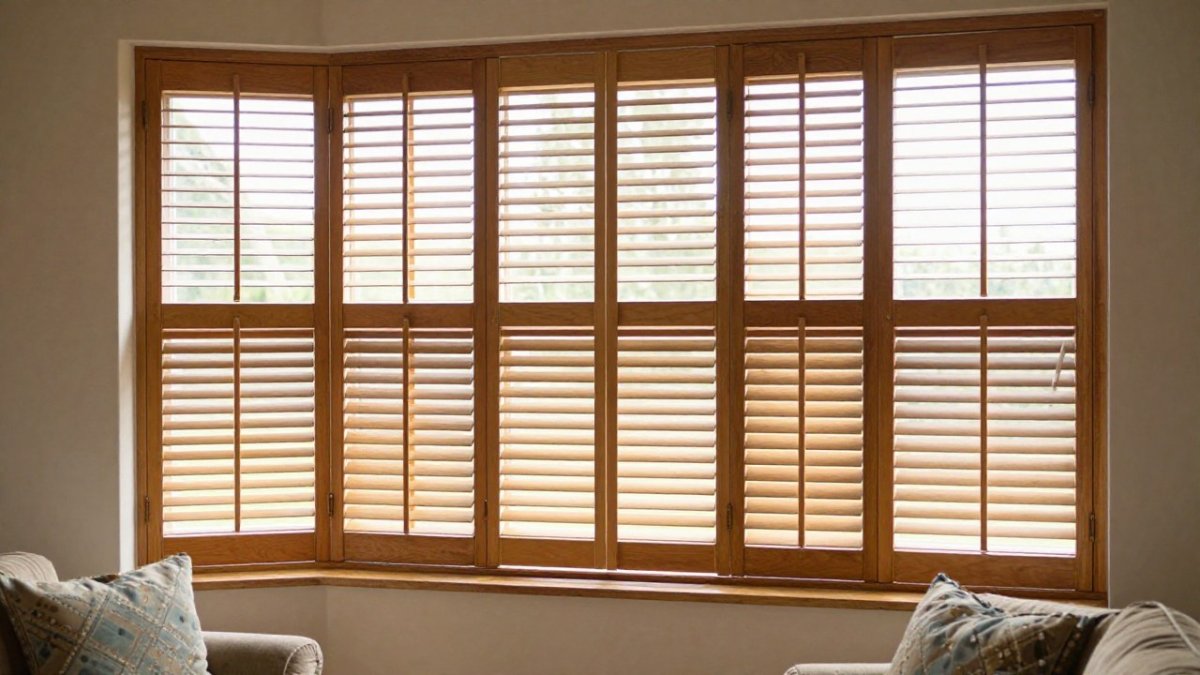
When closed, full-height shutters block the view completely and cut out most direct sunlight. Open them and the whole window is revealed again, which gives the room a clean, architectural look.
Pros:
- Maximum privacy and light control
- Strong visual impact on tall sash and Georgian-style windows
- Good insulation when the panels fit tightly
Cons:
- Blocks the view when closed, which can make a small room feel darker
- Heavier, so the hardware and fitting need care
- Usually costs more than partial-height options because of the extra material
Tier-on-Tier Shutters: Split Control for Light and Privacy
Tier-on-tier shutters divide the window into two sections that operate separately. The lower tier can be closed for privacy while the upper tier stays open to let in daylight, or the reverse.
This split is useful in rooms where you want natural light without being seen from the pavement. A bedroom or ground-floor dining room often works well with tier-on-tier fitting.
Pros:
- Lets you balance privacy and daylight with one window
- Flexible day-to-day use
- Suits tall windows well
Cons:
- Two sets of hinges and panels mean more to maintain
- The dividing rail is visible when the shutters are open
- Needs accurate measuring so both tiers align neatly
Café-Style Shutters: Lower-Half Cover for Kitchens and Living Rooms
Café-style shutters cover only the lower half of the window, leaving the upper half clear. They are a popular choice for kitchens, where you want privacy at sink height but still want daylight and a view of the garden.
They are also practical in living rooms where people sit at eye level near a window, since the top half still brings in light and lets the room feel open.
Pros:
- Privacy at eye level without losing daylight
- Lower cost than full-height options
- Quick to open and close
Cons:
- Does nothing to block light coming in from above
- Less effective for security than full-height panels
- Not ideal for rooms where you want total darkness
Bay Window Shutters: Fitting Angled and Shaped Openings
Bay windows and other angled or shaped openings are where standard ready-made blinds often leave gaps. Each panel has to be cut and hung to the exact angle of the frame, which is why custom fitting matters here.
Bay and shaped openings are a good fit for custom-made shutters, as each panel can be made to suit the frame’s angles. Expert fitting and a free home consultation can help confirm measurements.
Pros:
- Closes fully across angled glass with no gaps
- Can be tailored to arched and irregular shapes
- Gives a bay a coherent, built-in look
Cons:
- Custom work takes longer than off-the-shelf options
- Pricing depends on the number of panels
- Needs a precise site survey before ordering
Materials, Costs and Lifespan: Comparing Wood, Composite, Vinyl and Aluminium
The material you choose affects how the shutters look, how long they last and how much maintenance they need. The material you choose affects appearance and upkeep. The table below sets out the general trade-offs of each material side by side.
| Material | Appearance | Moisture resistance | Maintenance | Typical lifespan | Best suited to |
|---|---|---|---|---|---|
| Real wood (including hardwood and basswood) | Warm, natural grain; suits period homes | Moderate, needs a protective finish | Periodic painting or varnishing, typically every few years | Long, and can be refinished over time | Living rooms, bedrooms, heritage properties |
| Composite | Consistent finish; can mimic wood | High, engineered to resist damp | Wipe-clean; no repainting | Long | Kitchens, bathrooms, busy family homes |
| Vinyl (PVC) | Uniform, often white; less natural | Very high, fully waterproof | Wipe-clean; no repainting | Moderate to long | Bathrooms, utility rooms, budget-conscious projects |
| Aluminium | Sleek, minimal, contemporary | Very high, will not swell or warp | Wipe-clean; powder-coated finishes | Very long | Modern homes, large glazed openings, coastal exposure |
Wood. Real wood gives a warm, traditional finish and can be refinished over time, but it needs periodic painting or varnishing to protect it from moisture. Wood is generally less forgiving in damp rooms unless it is well sealed. For expert guidance on wooden shutter design and construction choices, see the wooden shutter design consultation guide.
Composite. Composite materials are engineered to resist damp and hold their shape, and generally need no repainting. The finish can look less natural than real timber.
Vinyl. Vinyl is fully waterproof and easy to clean, which makes it a practical option for bathrooms and utility rooms. It can look less natural than wood or composite.
Aluminium. Aluminium is light, strong and durable, and it will not swell, warp or rot. It suits a more contemporary style.
What drives the price. Pricing depends on the style, the number of panels, the material chosen and the size and shape of the windows. For current prices and a figure specific to your home, request a free quote from Wooden Shutters.
Lifespan and long-term value. A well-fitted wooden shutter that is maintained can be refinished rather than replaced. Composite and aluminium resist moisture and need little upkeep. Weigh the purchase price against the maintenance time and replacement cost you are prepared to accept.
How to Choose the Right Shutter for Your Home
Choosing a shutter is really four decisions in sequence: how much of the window you want covered, how you want to control light and privacy, what material suits the room, and how the shutters will be operated and fitted. Working through them in that order stops you buying on looks alone and then finding the shutters do not suit how you live.
1. Decide the coverage. Full-height shutters cover the whole opening and give the most privacy and darkness. Tier-on-tier splits the window into two independently operated sections, so you can close the lower tier for privacy while the upper tier stays open for daylight, useful in bedrooms and ground-floor dining rooms. Café-style shutters cover only the lower half, which suits kitchens where you want privacy at sink height but still want daylight and a view of the garden. Bay and shaped windows need panels cut to the angle or curve of the frame.
2. Balance light, privacy and ventilation. Louvred or plantation shutters have adjustable slats that angle to let in light while blocking direct sun, and they can be tilted open for airflow without giving up privacy. Solid-panel shutters give the most privacy and insulation but offer no see-through option when closed. Think about the time of day the room is used: a west-facing living room that overheats in the afternoon may benefit from louvres angled to cut low sun, while a bedroom that needs darkness may suit a solid panel or a tight-fitting full-height design.
3. Match the material to the room. Wood gives a warm, traditional finish and can be refinished, but needs periodic painting or varnishing. Composite and vinyl resist damp well and need little upkeep, which suits kitchens and bathrooms. Aluminium is light, strong and very durable, and suits a more contemporary style. The materials section above sets out the trade-offs in full.
4. Plan the operation and fitting. Tracked shutters glide along a rail, which suits wide openings and patio doors where folding panels would be awkward. Measure the opening properly before ordering, measuring a bay or arched window by eye often leads to panels that don’t close fully. A site survey is the reliable way to get the angles and depths right.
A quick guide by room:
- Bedroom: full-height or tier-on-tier for privacy and darkness; consider solid panels if total blackout matters.
- Kitchen: café-style or composite/vinyl louvres for privacy at sink height with easy cleaning.
- Living room: full-height or tier-on-tier depending on how much daylight you want; louvres give flexible control.
- Bathroom: vinyl or composite for moisture resistance, with louvres for ventilation.
- Patio doors and wide openings: tracked shutters that glide along a rail.
- Bay and shaped windows: custom panels cut to the frame, measured on site.
Booking a Free Home Visit to Measure Your Windows
The simplest next step is a free home visit. A member of the Wooden Shutters team can visit your home for a free consultation, talk through the options and help take measurements, with no pressure to buy. Once you have the measurements and a clear idea of the styles you like, you can decide at your own pace.
Book a free home visit with Wooden Shutters to get expert advice on the right shutters for your windows.
Last Updated: November 25, 2026
Frequently Asked Questions
What is the difference between full-height and tier-on-tier shutters?
Full-height shutters cover the whole window from sill to head in one panel set, giving maximum privacy and blackout potential when closed. Tier-on-tier shutters split into an upper and lower section that open independently, so you can let light in from the top while keeping the lower half private. Full-height suits rooms where privacy matters most, such as bedrooms and ground-floor fronts. Tier-on-tier suits living rooms and bathrooms where you want daylight without being overlooked. Both can be made to measure in solid or louvred wood.
Are café-style shutters suitable for living rooms?
Yes. Café-style shutters cover only the lower half of the window, leaving the top open to daylight and views. They work well in living rooms, kitchens and dining areas where you want some privacy from street level without losing natural light. They also suit bay windows where the lower sections need covering. Because they do not block the full opening, they are often chosen by homeowners who want a traditional look with a lighter feel.
What type of shutters works best for bay windows?
Bay windows have angled or curved sections, so shutters need to be made to measure for each panel rather than bought as standard sizes. Many homeowners choose separate shutters for each angled section, often with tier-on-tier or café-style designs for flexibility. Measuring the bay accurately, including the angles and any sill or radius, is essential to avoid gaps. A home visit where the windows are measured in person helps ensure a close, well-fitting result.
Do window shutters provide privacy and light control?
Yes. Wooden shutters offer adjustable louvres or solid panels that let you control how much light enters and how much of the room is visible from outside. Tilting the slats admits diffused daylight while keeping the room private, and closing the panels blocks direct sunlight and most views. Solid-panel designs give the strongest privacy and light control, while louvred shutters offer airflow and a softer glow. Choosing the right slat size and panel layout makes a noticeable difference.
