
Last Updated: November 16, 2026
Quick Summary
Timber shutters can improve window insulation, but the effect is modest and depends far more on fit than on the wood itself. A well-fitted hardwood shutter traps a layer of still air between the room and the glass, slowing heat transfer and cutting draughts. They are not a substitute for double glazing or secondary glazing.
- The trapped air gap does most of the insulating work, not the timber panel itself.
- Louvred shutters left open in winter give you almost none of the insulation benefit.
- A panel with visible gaps at the edges leaks air and undoes most of the insulating benefit.
- Shutters can seal better than blinds because solid panels close the window more tightly.
- Close shutters before the sun hits the glass in summer to block solar gain.
Table of Contents
- Do Timber Shutters Actually Improve Window Insulation?
- How Shutters Reduce Heat Loss and Draughts
- Do Shutters Reduce Draughts?
- Shutters vs Blinds for Insulation
- Shutters vs Secondary Glazing
- Best Window Coverings for Insulation: A Comparison
- Keeping Rooms Warm in Winter and Cool in Summer
- Book a Free Home Visit to Assess Your Windows
- Frequently Asked Questions
Do Timber Shutters Actually Improve Window Insulation?
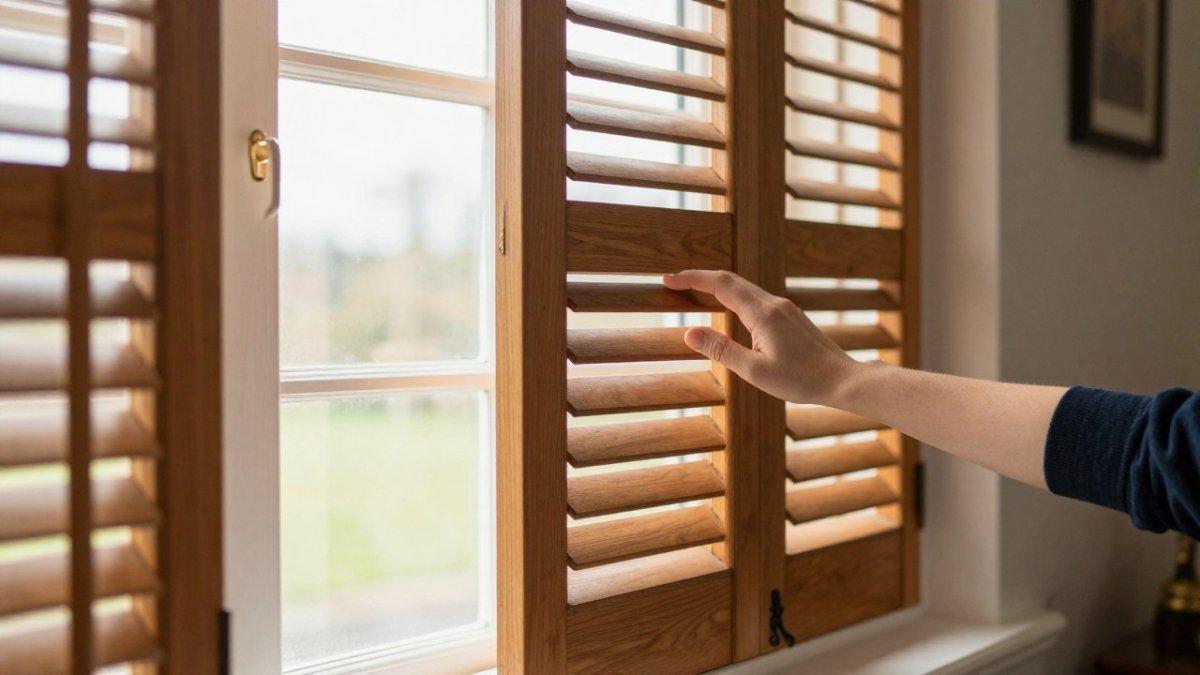
Yes, timber shutters can improve window insulation, but the effect is modest and depends far more on fit than on the wood itself. A well-fitted hardwood shutter adds a layer of still air between the room and the glass, which slows heat transfer and cuts the draughts that make a window feel cold. You can browse the full shutter range to see the options available.
Here is the honest version most guides skip: a shutter is not a substitute for double glazing or secondary glazing. It is a window treatment that reduces heat loss at the window, and it does that job well when the panels close tightly against the frame.
What the measured thermal performance data shows
Measured thermal performance for shutters is genuinely hard to pin down. A shutter’s contribution varies with the gap behind it, how airtight the closed panel is, the timber’s thickness and the size of the window.
What the physics supports is straightforward. A closed shutter creates a pocket of trapped air, and still air is a poor conductor of heat. Add a solid timber panel and you have slowed both convection and radiation. The gain is real but incremental, and it is largest on single-glazed or older sash windows where the glass itself offers little resistance.
How Shutters Reduce Heat Loss and Draughts
Shutters reduce heat loss by trapping a layer of still air between the panel and the glass, then blocking the radiant heat that would otherwise pass through the window. Closed louvres also interrupt the cold draughts that slip around poorly sealed frames and sashes.
The air gap that does the work
The air gap is the whole mechanism. Too small and the panel touches the glass, conducting heat straight through. Too large and the trapped air starts to circulate, which moves warmth around rather than holding it still. A properly fitted shutter sits close to the reveal without pressing against the frame, and that close fit is what separates a bespoke panel from a ready-made one.
This is where installation detail matters most. A panel with visible gaps at the edges leaks air, and air leakage undoes most of the insulating benefit.
Do Shutters Reduce Draughts?
Shutters do reduce draughts, but only when the closed panel forms a continuous barrier across the window. The draughts people feel at a window usually come from two places: air leaking around the frame, and cold glass chilling the air that then falls into the room.
A full-height or café-style shutter with solid panels addresses the second problem well. It puts a physical barrier between the room and the chilled glass, so the cold downdraught is broken before it reaches your sofa. For the first problem, the fix is in the fitting: tight tolerances, proper beading and a frame that follows the shape of the window, including the awkward angles of a bay.
Watch out: louvred shutters left open in winter give you almost none of the insulation benefit. The louvres are for light and privacy control, and the insulating performance comes when they are closed.
Shutters vs Blinds for Insulation
Shutters can seal better than blinds for insulation in many homes, mainly because a solid timber panel with closed louvres closes the window more tightly than fabric or thin slats. Blinds leave gaps at the sides and top, and air moves freely past them.
That said, the gap is not enormous, and a well-fitted thermal blind or a heavy lined curtain can hold its own on a single-glazed window. Where shutters pull ahead is in the combination of close fit, solid mass and the fact that they stay in place permanently rather than being pulled about. If you are weighing the two, our blinds range shows the options we fit alongside shutters, so you can compare like for like before deciding.
| Feature | Timber shutters | Blinds | Lined curtains | Secondary glazing |
|---|---|---|---|---|
| Trapped air layer | Yes, when closed | Partial | Partial | Yes |
| Draught reduction | Good with close fit | Limited | Moderate | Good |
| Light control | Excellent | Good | Moderate | Poor |
| Permanent fitting | Yes | Yes | No | Yes |
| Best for | Period and bay windows | Budget rooms | Rentals | Noisy or exposed windows |
Shutters vs Secondary Glazing
Secondary glazing adds a second pane and a sealed air gap, which lifts the whole window’s thermal performance. If your goal is purely to cut heat loss and noise, secondary glazing is a strong option.
Shutters also control light and privacy, suit period homes, and add character. For a bay window with unusual angles, a bespoke shutter can be a good fit. The sensible answer for many homes is both: secondary glazing for performance, shutters for daily comfort and looks.
Best Window Coverings for Insulation: A Comparison
The best window covering for insulation depends on your window, your budget and what you are trying to fix. For single-glazed sash windows in older homes, a close-fitted timber shutter is one of the most practical upgrades because it improves comfort without altering the window’s appearance. For new double glazing, the glass already does most of the work, and shutters add comfort and control rather than dramatic savings.
Material matters here, and it is where the keyword deserves a direct answer. The thermal conductivity of the panel is a minor part of the mechanism, because the trapped air gap does most of the work. Panels that hold their shape keep closing tightly over time, and a warped panel leaks air at the edges, which undoes the insulating benefit.
That gives a practical hierarchy. A well-fitted hardwood shutter outperforms a poorly fitted composite one, and a well-fitted composite shutter can outperform a warped timber one. Fit and construction beat material, but material determines how long the fit lasts. If durability is your concern, our comparison of durable shutters for family homes covers how the materials hold up in daily use.
Against the alternatives, the trade-offs are worth weighing. Secondary glazing adds a sealed second pane and lifts whole-window thermal performance, so if pure heat loss and noise are the goal it is a strong option. Draught-proofing strips around the frame tackle air leakage directly and can be worth doing alongside shutters. Shutters offer close fit, solid mass, permanent installation, and good light control and suitability for period and bay windows.
A realistic way to weigh them is to consider which areas of heat loss matter most in your home. Shutters sit alongside as a comfort, light and privacy upgrade that also reduces heat loss at the window, and for many homes the sensible answer is a combination rather than a single fix.
Keeping Rooms Warm in Winter and Cool in Summer
Timber shutters can help in both seasons. Closed in winter, they hold warmth at the window and break the cold downdraught. Closed during the day in summer, they block direct solar gain before it heats the room, and tilting the louvres lets you keep the light while cutting the glare.
The summer benefit is real but conditional. Shutters work best when closed before the sun hits the glass, not after the room has already warmed. Pair them with sensible ventilation in the evening and the room stays noticeably more comfortable through a heatwave.
Book a Free Home Visit to Assess Your Windows
Every window is different, and the honest answer to “will shutters help my insulation” depends on what is actually there. Our free home visit sends an adviser to measure up and talk through the options with no pressure and no obligation. You can arrange your shutter consultation at a time that suits you, or get in touch if you would rather ask a question first.
The gap between a shutter that insulates and one that does not is almost always in the fitting, not the timber. If you want panels that close tightly, suit awkward bay windows and are made to last, Wooden Shutters offers bespoke design, sustainable sourcing and expert installation across the region. Get started with Wooden Shutters and book a free home visit to find out exactly what your windows need.
Frequently Asked Questions
Do timber shutters help keep a room warm?
They can, provided they are fitted closely to the window reveal. A solid timber panel creates a barrier of still air between the glass and the room, which slows heat transfer. That said, the effect depends heavily on fit, material thickness and whether the window itself is already double glazed. Treat shutters as one part of a whole-window approach rather than a replacement for fixing gaps in the frame or upgrading old glazing.
Are shutters more insulating than curtains or blinds?
Generally, yes, because a rigid timber panel sits closer to the glass and holds its shape, so the trapped air layer stays consistent. Curtains can perform well when heavy and hung with a pelmet, but they are easily disturbed and often leave gaps at the edges. Standard roller or venetian blinds offer limited insulation on their own. The deciding factor in shutters vs blinds for insulation is usually how closely the product seals to the reveal.
Are shutters as effective as secondary glazing?
Secondary glazing adds a second pane of glass with a sealed air gap, so it usually outperforms shutters on pure thermal performance. Shutters win on day-to-day control: you can adjust louvres for light and ventilation without opening the window. Many homes use both, with shutters handling privacy and light while secondary glazing tackles the glass. Ask for an assessment of your specific windows before deciding.
Does the fit of bespoke shutters affect insulation?
It is the single biggest variable. A panel with gaps around the edges lets warm air escape and cold air in, which undermines the point of the product. Bespoke shutters made to the exact shape of your window, including awkward bay angles, close that gap. Proper installation and a close fit matter more than the difference between one timber and another, so have the windows measured before ordering.
