
Last Updated: November 19, 2026
Quick Summary
Custom window shutters are built to the exact dimensions of your window, so they fit better and look better than stock options. They offer adjustable light and privacy control, and well-fitted timber shutters can help reduce draughts and heat loss.
- Stock blinds come in standard sizes, which often leaves gaps or light leaking around the edges of your window.
- Angling the louvres admits soft daylight while blocking the view from the street.
- Wider louvres admit more light, while narrower louvres give more privacy at the same angle.
- Made-to-measure shutters can be fitted to bay windows, arched tops and other unusual openings.
- Request a written quote that separates the product, survey and fitting so you can compare like for like.
Table of Contents
- Why Made-to-Measure Shutters Fit Better Than Stock Options
- Light Control and Privacy Without Losing the View
- Are Timber Shutters Good for Insulation?
- Custom Shutters for Unusual Windows, Bays and Shaped Openings
- Wooden Shutters vs Blinds: Cost, Looks and Lifespan
- How to Choose Window Shutters and Estimate Long-Term Value
- Booking a Free Home Visit to Measure Your Windows
- Frequently Asked Questions
Why Made-to-Measure Shutters Fit Better Than Stock Options
Made-to-measure shutters are built to the dimensions of your window, which is why custom window shutters tend to look better and fit better than stock alternatives. Most high street blinds come in standard sizes, so any window that falls outside them ends up with gaps, awkward overlaps or light leaking around the edges. A made-to-measure set removes that problem from the start.
At Wooden Shutters, bespoke shutters are made to your own window measurements rather than a catalogue size, and our team can advise you on how they will fit your window.
The gap between stock and bespoke is most obvious in older homes, where walls and window openings are rarely perfectly straight. A standard size may look close enough from the pavement, but up close the difference shows. Custom work accounts for those quirks instead of hiding them.
Fit also affects how the shutters perform day to day, so getting the measurements right matters.
Light Control and Privacy Without Losing the View
Custom window shutters give you adjustable control over light and privacy. Angle the louvres to let in soft daylight while blocking the view from the street, or close the panels fully when you need complete darkness for a bedroom or a home cinema. For conservatories specifically, see our guide to bespoke conservatory shutters for privacy.
This matters most in rooms that face a busy road or a neighbour’s window. Instead of choosing between a closed room and an exposed one, you can keep the outlook and still control who sees in. Many homeowners find they use the middle position most of the time, letting natural light in while keeping the room private.
The louvre spacing and tilt mechanism are the features to look at closely. Wider louvres admit more light, while narrower ones give more privacy at the same angle. A made-to-measure build lets you specify both to suit each room rather than accepting a single standard setting.
Are Timber Shutters Good for Insulation?
Timber shutters can help reduce heat loss through a window, though they are not a replacement for double or triple glazing. The solid wood panels and the air gap they create add a layer of thermal resistance, and closing them on a cold evening can make a room feel warmer and less draughty.
The effect depends on how well the shutters fit. A loose set with large gaps around the frame will let warm air escape, while a well-fitted set sealed against the reveal works much better. This is another reason custom sizing matters for insulation as much as appearance.
It is worth being realistic about the benefit. Custom window shutters can take the edge off a cold window and reduce draughts, but the amount of energy saved varies widely between homes and depends on the existing glazing, the building’s construction and how often the shutters are closed. Treat them as one part of a broader approach to keeping heat in, alongside good draught-proofing and glazing.
Custom Shutters for Unusual Windows, Bays and Shaped Openings
Unusual windows are where stock options most often fail. If you want to see how shutters are fitted to awkward window shapes, this guide walks through the process. Bay windows with angled sides, arched tops, circular openings and sloped conservatory roofs all need a different approach from a standard rectangular frame. Off-the-shelf blinds typically cannot be adjusted to fit these shapes without leaving gaps or looking like an afterthought.
Custom window shutters can be made for unusual openings. Bespoke work is designed around the shape of your window, so it is worth discussing your specific layout with us.
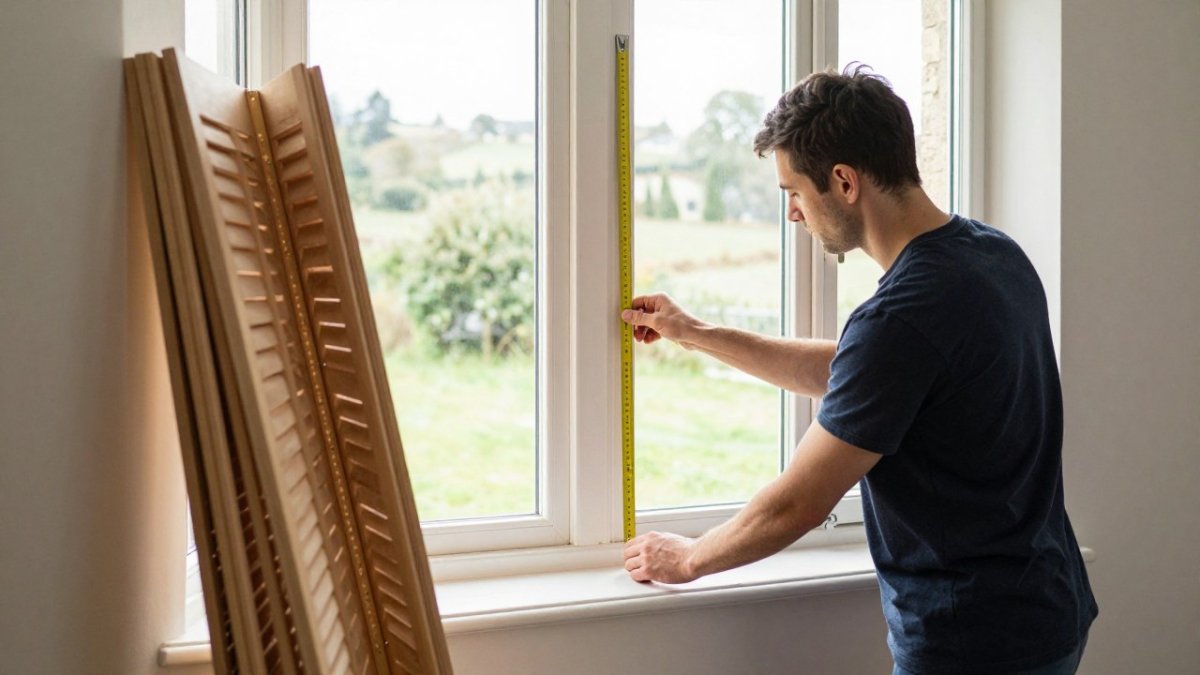
For unusual windows, measuring on site during a home visit is useful, as the actual openings and any quirks in the walls can be seen directly.
Wooden Shutters vs Blinds: Cost, Looks and Lifespan
Wooden shutters and blinds serve similar purposes, but they differ in cost, appearance and how long they last. For a closer look at custom shutters versus ready-made blinds, see our same-topic guide. Pricing for both depends on size, quantity, specification and fitting, so the most reliable way to compare is to request a quote for your own windows.
On cost, a made-to-measure shutter set is a bigger commitment than an off-the-shelf blind, and the quote will reflect the window size, the material, the frame type, the number of panels and whether fitting is included. Ask for a written quote that separates the product, the survey and the fitting so you can compare like for like.
On looks, shutters give a more substantial, architectural finish. They become a feature of the room and tend to suit period properties and traditional interiors well, though they also work in modern homes with clean lines. Blinds offer more variety in fabric and colour, which some homeowners prefer for a softer look.
On lifespan, a well-made timber shutter, cared for properly, can serve for many years. Ask for details on the timber, the finish and the warranty before deciding, and check the current pricing and terms directly with us.
On return on investment, be careful with the claim. Shutters can improve kerb appeal and the perceived quality of a room, and that may help a property stand out, but there is no guaranteed financial return. Treat any resale benefit as a possible bonus rather than a reason to buy. The stronger case is usually comfort, privacy and the fact that a well-fitted set does not need replacing as often as cheaper alternatives.
Watch out: lead times for made-to-measure shutters are typically longer than for stock blinds, so if you are working to a deadline, a sale, a rental turnaround or a renovation, confirm the delivery and installation dates in writing before you order.
The two options differ in cost, appearance and how long they last, as the comparison below shows. If you are weighing wooden shutters against blinds, you can also look at our premium wooden venetian blinds as a direct alternative.
| Factor | Wooden shutters | Blinds |
|---|---|---|
| Cost | Quote depends on size, material, frame and fitting | Pricing depends on size, quantity and specification |
| Looks | Substantial, architectural finish | More variety in fabric and colour |
| Lifespan | Many years if cared for properly | Check warranty and terms before deciding |
| Lead time | Typically longer than stock blinds | Typically shorter than made-to-measure shutters |
How to Choose Window Shutters and Estimate Long-Term Value
Start by listing what matters most for each room: privacy, light control, insulation, appearance or a combination. A bedroom facing the street has different needs from a living room with a large view, so decide room by room rather than choosing one style for the whole house.
The material choice is the decision that most affects how the shutters look, feel and age. Timber, engineered wood and moisture-resistant composites each behave differently, and the right pick depends on the room and the window.
Solid timber is the traditional choice and suits period properties and rooms where the shutters are a feature. It is worth discussing with us which materials and finishes are available for your windows.
Engineered wood is an alternative to solid timber for those looking for a different finish. It is worth discussing with us which material suits your windows.
Finish matters as much as material. Ask us what finishes are available and how they should be maintained.
To estimate long-term value, think beyond the purchase price. Consider how long the shutters are likely to last, how much upkeep they need, and whether they could help with comfort, insulation and the appearance of the property. Shutters are often a considered investment rather than a quick fix, so it helps to compare the total cost of ownership against cheaper alternatives you may need to replace sooner. The effect on a property’s value varies and is hard to predict, so treat that as a secondary benefit rather than a guaranteed return.
Finally, check the service. Ask how the consultation works, whether the measuring is included, what happens if the fit or finish is not right, and what aftercare is offered. A clear answer to each question tells you a lot about what you will actually receive.
Booking a Free Home Visit to Measure Your Windows
The simplest next step is a free home visit. A member of our team comes to your home, looks at each window and talks through the options for each room. There is no obligation to buy, and you can take your time deciding.
During the visit, we can explain the options for your windows and discuss how each would suit your home.
To arrange a visit, use the booking link on our website or get in touch with the team directly. Our guide on how to book a shutter consultation at home explains what to expect. Once your visit is booked, you can use the time to note which rooms matter most to you, so the conversation stays focused on your home. With Wooden Shutters, you get expert advice in your own space, bespoke made-to-measure shutters and professional installation from a family-owned Derbyshire business.
Frequently Asked Questions
Are custom window shutters worth the investment?
Custom shutters cost more than off-the-shelf blinds because they are made to the millimetre for your specific window. Pricing depends on the number of windows, the size and shape of each opening, the timber and finish chosen, and installation. For a current quote, visit the Wooden Shutters website or book a free home visit.
How long do wooden window shutters last?
A well-made timber shutter, properly finished and fitted, can remain serviceable for many years. Lifespan depends on the quality of the wood, the paint or stain finish, humidity in the room and how the shutters are maintained. Wooden Shutters uses sustainably sourced timber and traditional craftsmanship. Regular dusting and occasional refinishing are generally advisable for timber shutters.
Can custom shutters be made for unusual window shapes?
Yes. Bay windows, angled corners, arched tops and conservatory openings can all be measured and fitted with bespoke shutters. Measurements taken during a home visit allow shutters to be made to the actual opening rather than a standard size. Ask for a free consultation to discuss your specific window layout.
Do window shutters provide privacy while still letting in light?
Shutters with adjustable louvres let you angle the slats to block views from outside while still allowing daylight into the room. Closing the louvres fully gives privacy, and opening them partly lets light through.
